Moth Heat Treatment UK
Single-visit, chemical-free thermal treatment that kills clothes moths, carpet moths, larvae and eggs — without spraying chemicals on your fabrics.
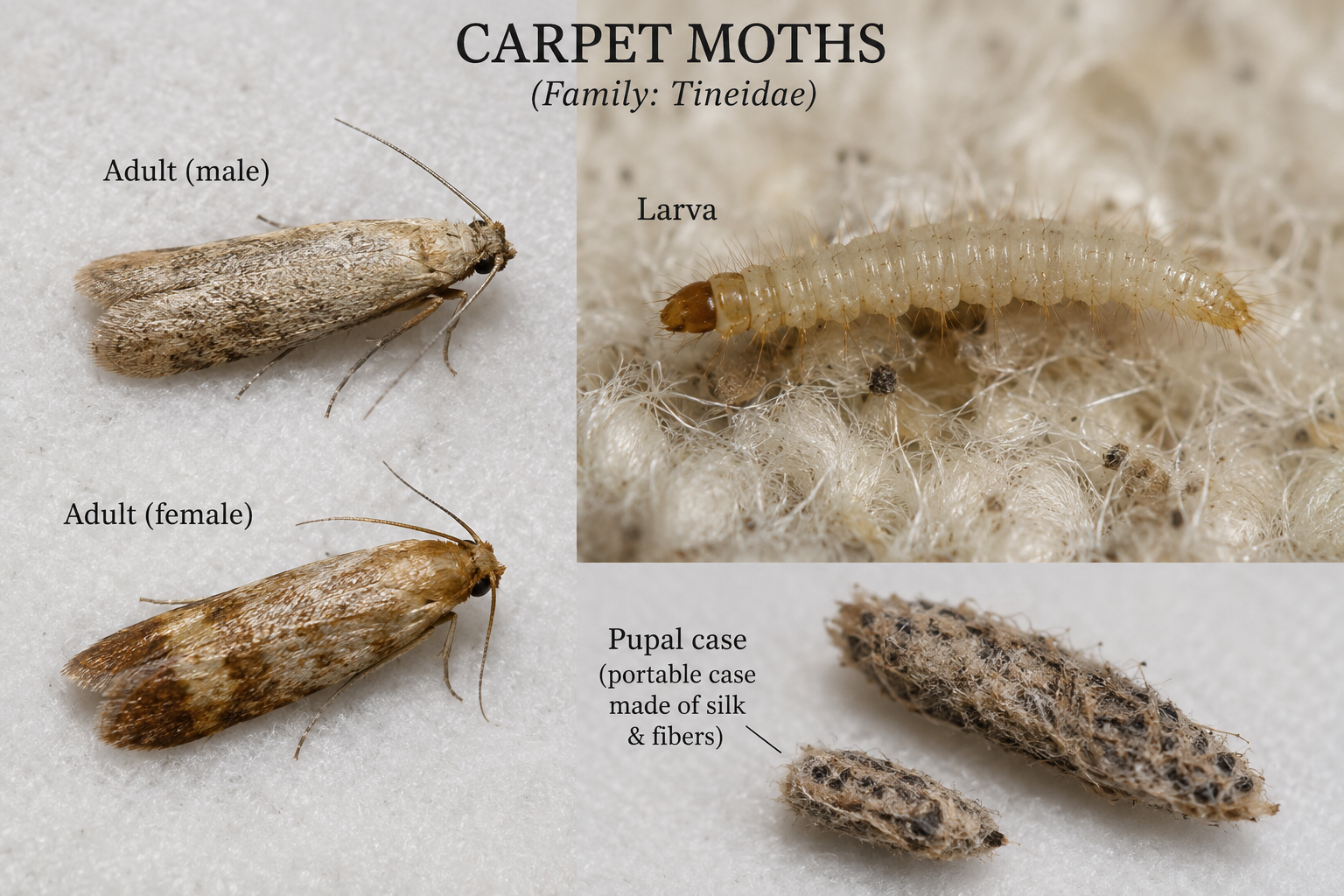
- Common Clothes MothTineola bisselliella
- Case-bearing Clothes MothTinea pellionella
- Brown House MothHofmannophila pseudospretella
- White-shouldered House MothEndrosis sarcitrella
Why heat treatment is the best moth solution in the UK
Moths are one of the most stubborn household pests in the UK. Clothes moths and carpet moths hide deep inside wool, cashmere, silk, upholstery and even behind skirting boards, where sprays and powders rarely reach. Worse, eggs and larvae are often protected inside fabric fibres, so chemical treatments usually need multiple visits — and the infestation keeps returning.
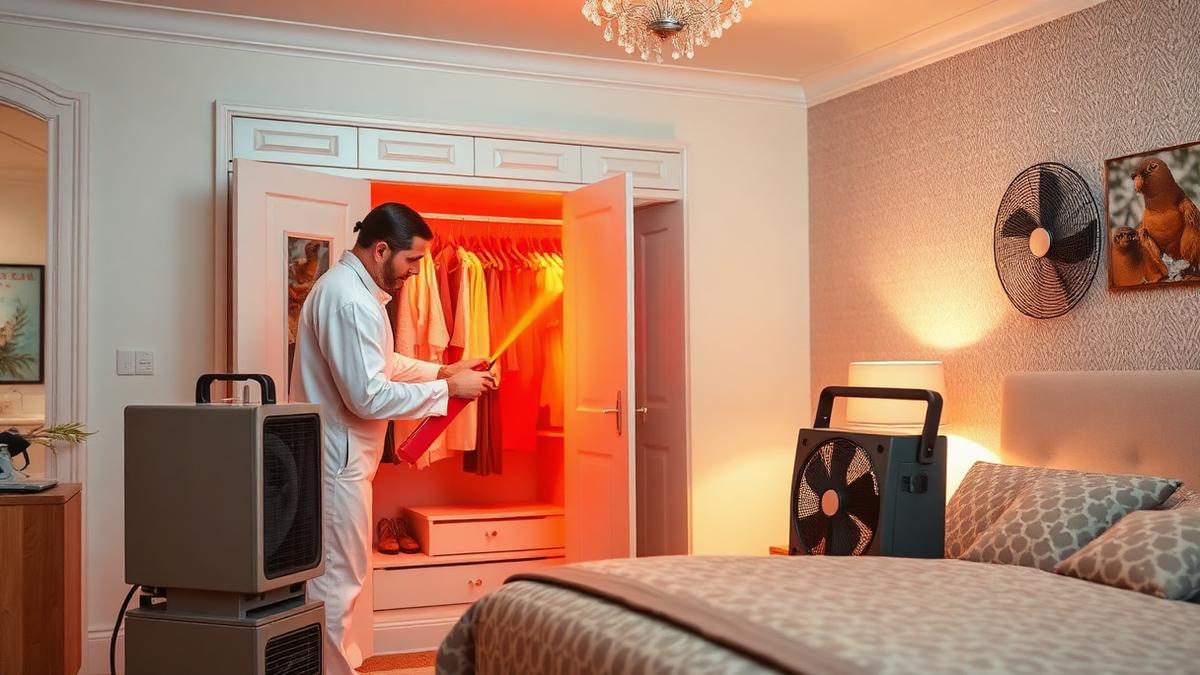
Heat treatment works differently. By raising the temperature of the affected rooms to 60–65°C and holding it there, every life stage of the moth is destroyed simultaneously. Eggs, larvae and adult moths cannot survive, so the infestation ends in a single day.
The benefits of chemical-free moth heat treatment
- No residue on fabrics. Nothing is sprayed onto clothing, carpets or upholstery, so there is no chemical smell or stain risk.
- Reaches hidden moths. Heat penetrates deep into wardrobes, drawers, mattresses, rugs and behind fixtures where sprays cannot reach.
- Safe for sensitive households. No pesticides means no risk for children, pets, allergy sufferers or anyone with asthma.
- Single visit. Most moth problems are resolved in one day rather than weeks of repeated chemical visits.
- Protects delicate textiles. Wool, cashmere, silk carpets and antique fabrics are treated without physical damage or chemical exposure.
Moth damage gallery
These images show typical signs of an active moth problem in UK homes, from damaged rugs and carpets to affected knitwear and monitoring traps. They help illustrate the kind of textile and flooring damage that moth larvae can cause when an infestation is left untreated.
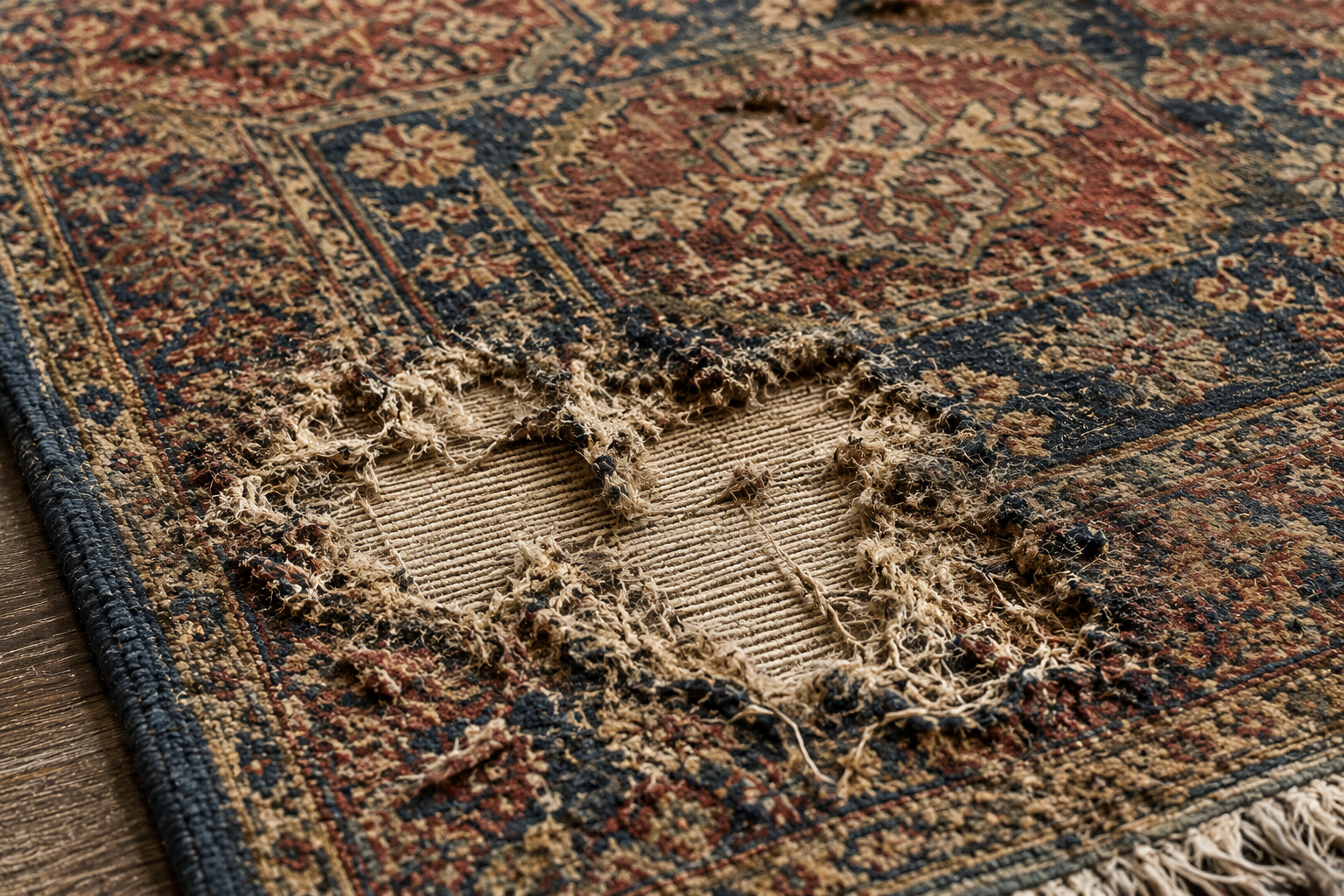
Heavy larval feeding can strip natural fibres from valuable rugs and expose the backing underneath.
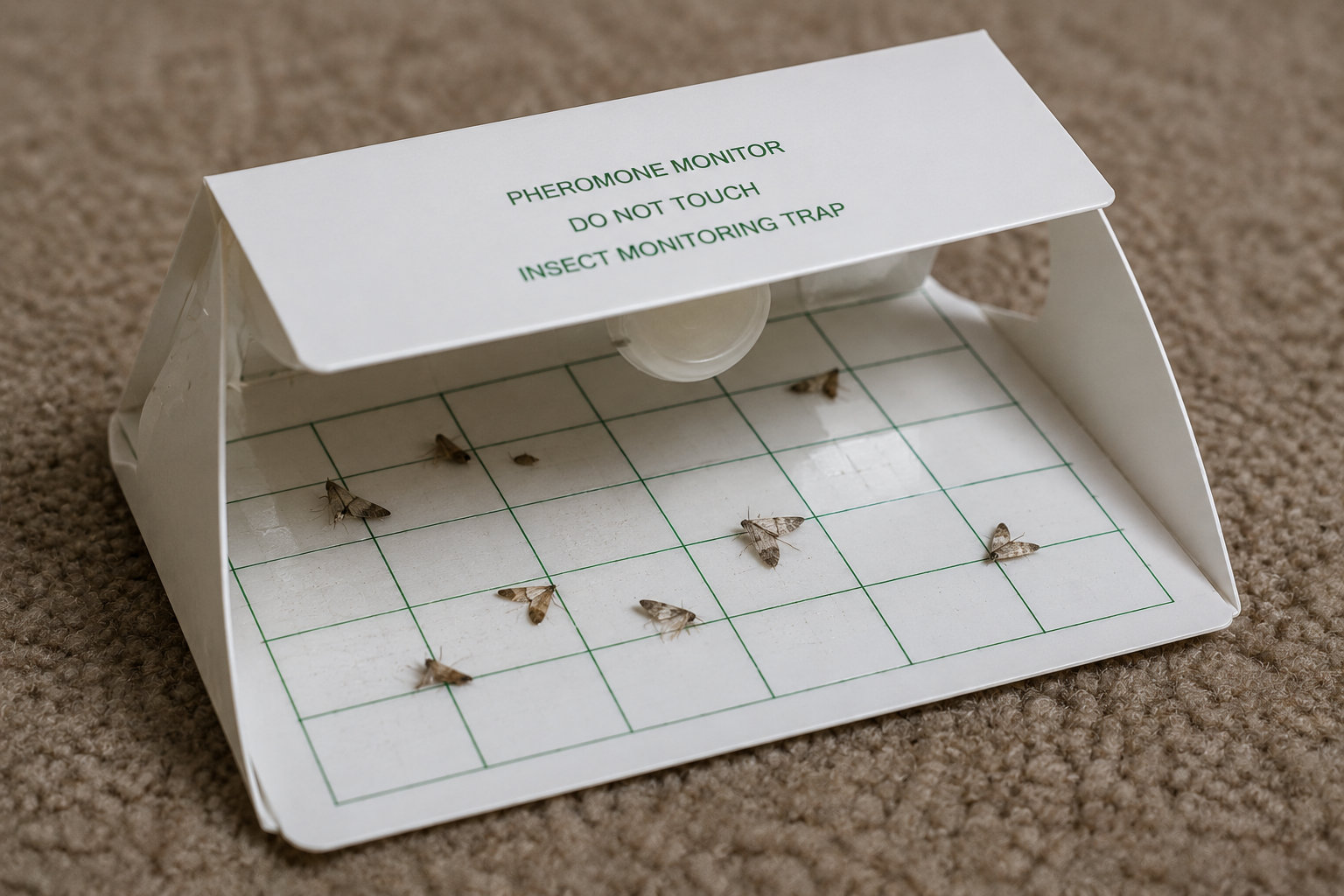
Pheromone traps help confirm moth activity and show whether adult moths are still present in the room.
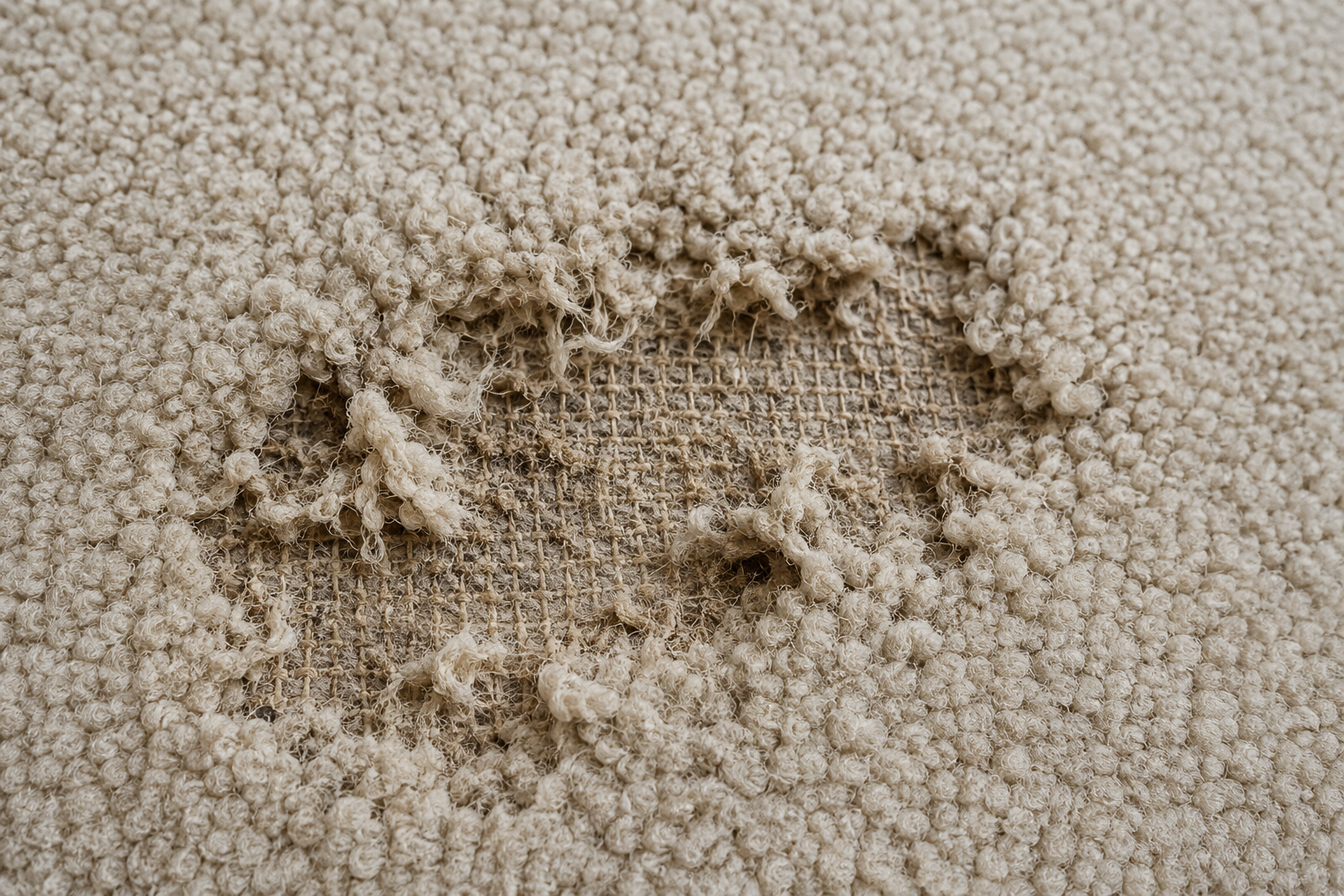
Carpet moth larvae often feed beneath the surface, leaving bare patches, thinning pile and irregular holes.
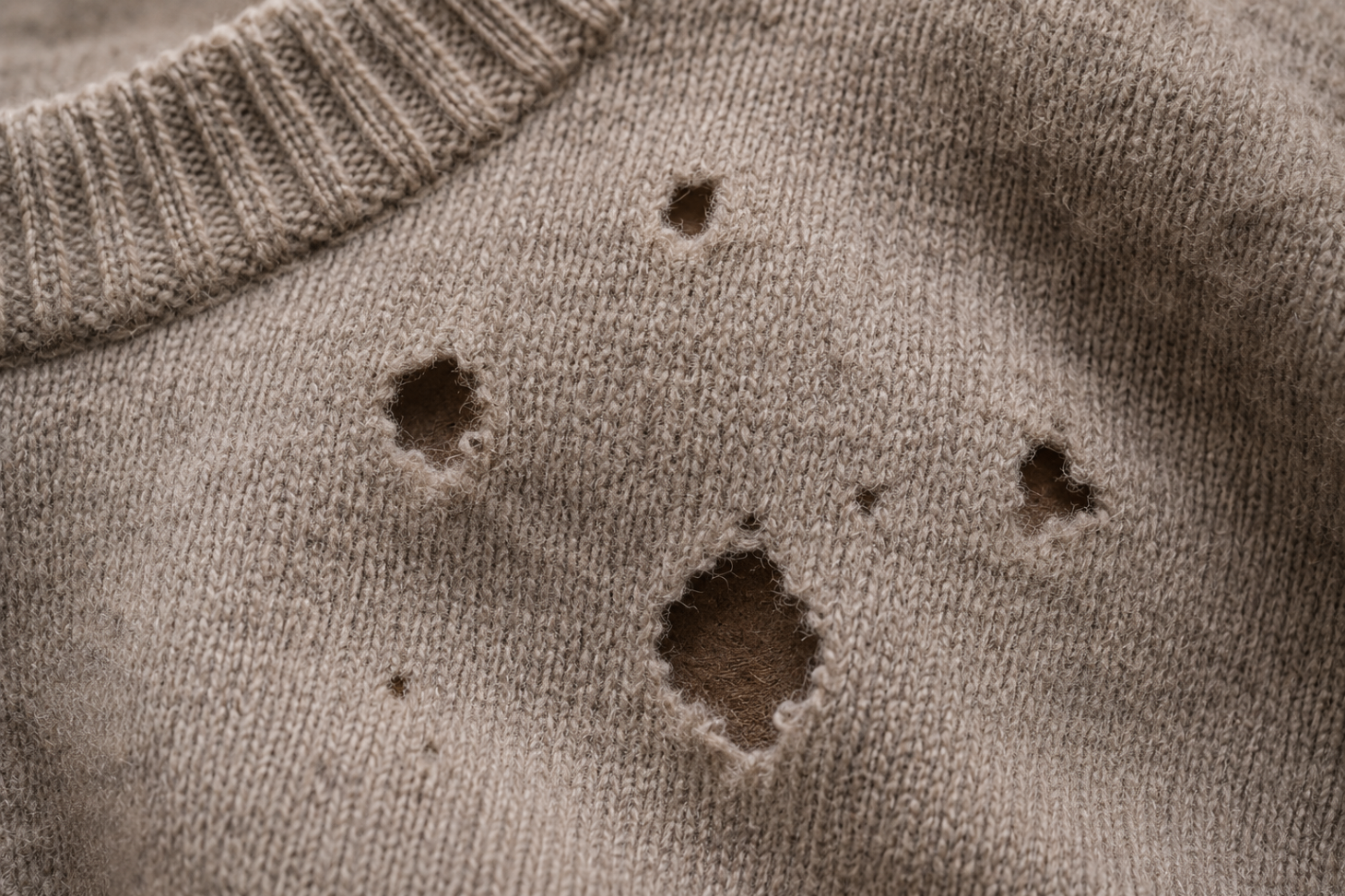
Clothes moth infestations commonly appear as small holes in wool, cashmere and other natural-fibre garments.
The five stages of a moth heat treatment visit
1. Inspection and survey
We identify the species, locate larvae and damaged textiles, and mark out harbourage areas such as wardrobes, under beds, rugs and upholstered furniture.
2. Preparation guidance
We advise on any heat-sensitive items to remove — aerosols, candles, oil paintings, certain plastics and houseplants. For the best possible results, we ask that as much clothing as possible is hung on clothes rails in the largest room so our technicians can circulate the heat evenly around each garment. This allows warm air to flow freely through sleeves, collars and folds where moth larvae and eggs often hide. Clothing left in drawers or tightly packed wardrobes will not receive the same level of heat penetration, so allocating the biggest room for hanging rails makes a significant difference to the success of the treatment.
3. Deployment
Industrial heaters and high-volume fans are positioned to distribute heat evenly. Door gaps are sealed and wireless temperature sensors are placed in the coolest spots.
4. Ramp and dwell
Air temperature rises to 60–65°C and is held once the coldest sensor reaches target. We monitor continuously with thermal imaging and probes to ensure no cold pockets remain.
5. Cool-down and handover
Equipment is removed and the room cools to a safe temperature. You receive a treatment report and guidance on preventing future moth problems.
Moth heat treatment preparation checklist
Fill in your details, tick items off as you go, then print or email the completed form to us to approve.
Open the checklistWhat types of moths we treat
Our heat treatment service covers the most common moth pests found in UK homes and businesses, including:
- Clothes moths — damaging wool, silk, fur, feathers and stored textiles.
- Carpet moths — feeding on wool carpets, rugs and underlay.
- Case-bearing clothes moths — leaving small silk cases on fabrics and skirting boards.
- Stored-product moths — infesting pantries, food storage and commercial kitchens.
Frequently asked questions
Need bed bugs gone — fast?
One visit. No chemicals. Guaranteed eradication of bed bugs and eggs. Call now for a no-obligation quote — most jobs booked within 48 hours.